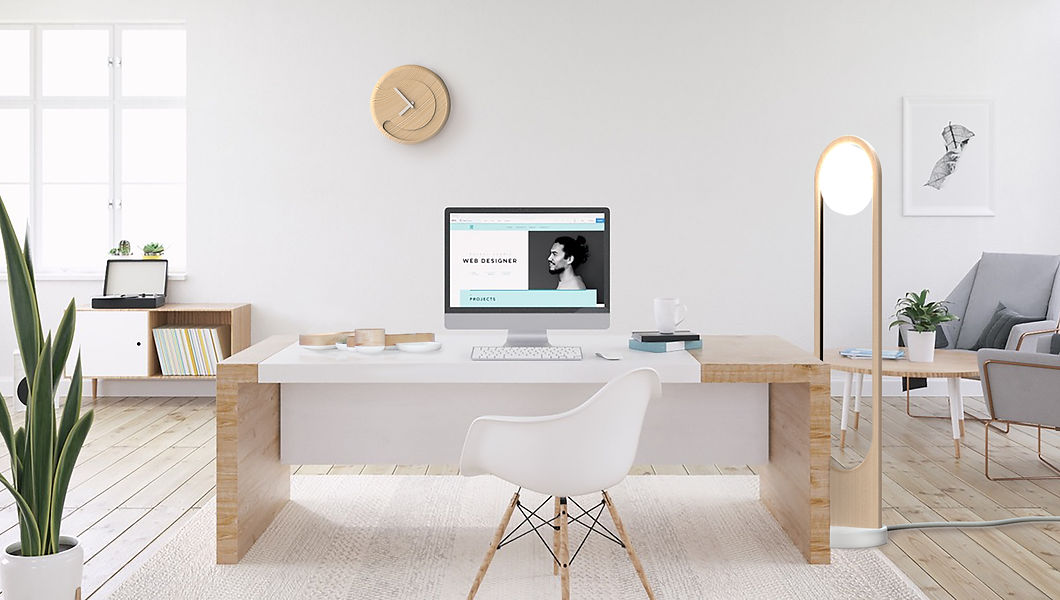
Essence
Group project
A line of office accessories made for the company Hightower
10 weeks, Winter 2019
Objective
To create a biophilic piece of furniture or accessory for the office furniture company, Hightower.
Execution
The quarter was split into two parts; an individual portion for the first five weeks and a group portion for the last five. Hightower came to our midterm presentations for our individual projects and separated us into groups based on similarities between projects. One project out of each assigned group was chosen as the lead, where the others then abandon their own projects and work as a team on the project that was chosen. The final product was developed in weeks six through ten.
Weeks 1-5


What is biophilia?
The biophilia hypothesis suggests that people have a tendency to seek out connections with nature. This tie with the natural world stems from human desire to be closer to other life forms. The movement in architectural and product design towards biophilia aims to bring people closer to nature so that they can enjoy it in everyday life.

Demographic
The demographic I want to cater to is a young professional in a more traditional workplace (as opposed to a coworking space) such as a cubical work space or a personal office.

Inspiration
Intro
While biophilic design is becoming a growing trend in the workplace, adding plants into the office is not always the easiest or most spatially efficient way to incorporate nature into to the workplace.
How might we incorporate the same feelings of relaxation and comfort that we receive from a natural environment into the workplace while conserving space?
Devon, 29
Civil engineer
• Grew up in the country on acreage
• Now lives in the city in an apartment
• Has a personal office with one window that looks out to other buildings
• White walls and a desk against the wall
• Keeps a fake plant at his desk because it is too hard to take care of a
real plant
• Working in an office without any connection to nature makes him dread going to work
I would love to have more plants or something natural in the office, but there just isn't enough space.
I drew inspiration from the multifuntionality of these products, with and without biophilia, and how they utilized this to get the most out of the space.


Market Research
Many of the biophilic products on the market are types of planters or incorporated biophilia through larger pieces of furniture, such as a standing fountain. We found an opportunity for a more high quality and unconventional line of products for the workplace.
Opportunity
Research Takeaways

People crave the serenity and relaxation found in the natural world...
However this is not always provided to them in the common work environment...
Initial Sketches
•
•
•
According to a study done by Sussex Medical School, the sounds of nature prompt more external-focused attention, reducing stress and slowing heart rate, improving focus and concentration.
Plants reduce noise levels by reducing reverberation time and absorbing sound waves
The color green also gives people feelings of well-being and relaxation
•
•
•
One of the main reasons that people did not have plants in their office was because there was not enough room on or around their desks and overly crowded desks gave them feelings of anxiety
Another factor was that there were no windows to give the plants sufficient light
87% of people interviewed still wanted to incorporate natural elements into the office because the disconnect from nature made the office less inviting

My initial concepts focused on incorporating nature into furniture that would already exist in the office settings, so as to make the space more inviting and relaxing without adding clutter.
I explored planter furniture where the legs of a table/stool would serve as a trellis for the plant potted beneath it.
I also played with how the sense of nature could be incorporated into the office without using plants with a water fountain table, clock that stirs sand or runs over grass, and a light that is diffused through moving water. I decided to move more in the direction of using senses to covey the essence of nature.
Concept Sketches
Slide deck, navigate with arrows.


My concepts focused on incorporating the soothing nature sounds of trickling water into a clock. I wanted to use a clock because clocks are unobtrusive and necessary in the office environment and are meant to be seen. I chose to incorporate moving water because you don’t have to see it to still feel the presence of nature, but it is also visibly beautiful.
I was greatly inspired by the softer, more organic shapes of Hightower furniture to give a more comfortable and approachable feel to the room.

Prototyping
The main elements I was prototyping were scale and how the water would come out of the clock. Small holes at the top allowed for the water to come out at a steady pace. Because of the well at the bottom of the clock face, as the water pooled, the droplets were audible.


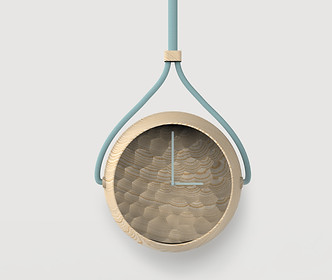
Midterm Concept
The inspiration for my midterm concept draws from the way water's path is manipulated by rock forms. The water is pumped from the bottom of the clock to the top where it flows through the openings and cycled through. The power cord is able to hang below the clock or be suspended above, depending on where the outlet is.
Weeks 6-10

From here, we were put into a group to design a series of office accessories based on the acoustic clock, continuing the motif of biophilia.
Post Midterm Feedback
How might we take common office accessories and use them to promote productivity by transforming the environment from one of stagnation to be more representative of nature in form and function?
Inspiration
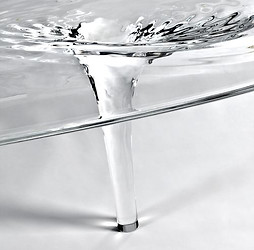
We took aesthetic inspiration from softer, more organic forms of Scandinavian design. Whites and cool earth tones paired with light wood resonated strongly with the concept of biophilia.


Refinement
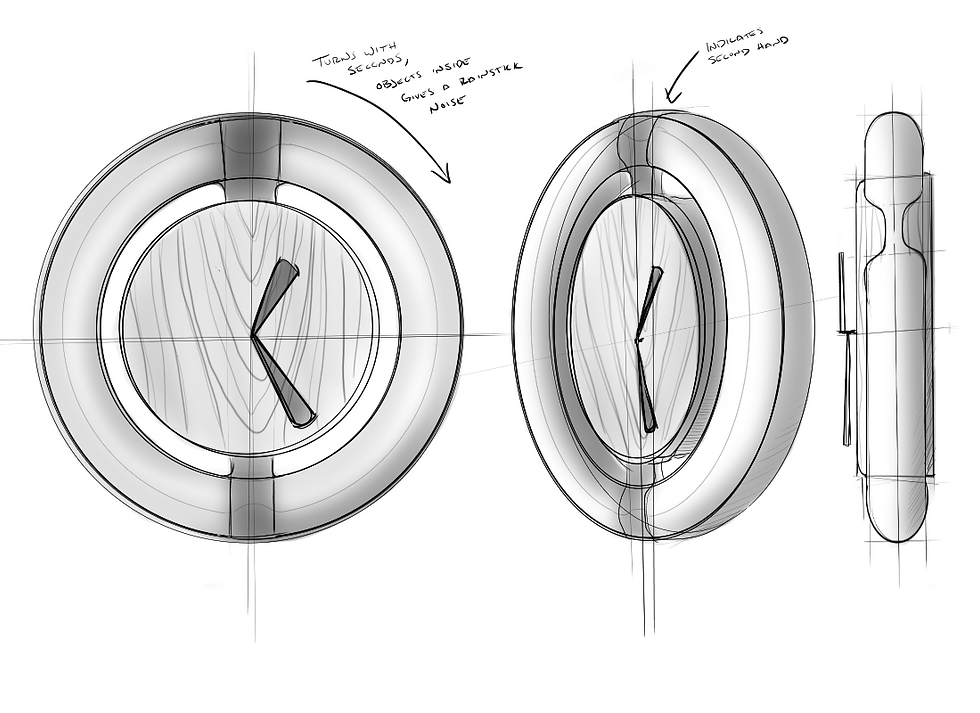


In refining the clock design, we explored different ways the clock could create a biophilic sound, including sand inside the clock and different materials brushing agsinst eachother. In form, we played with different ways the second hand could represent the element of air and water and possibly create ambient noise.
The Essence Line

Vind
The Essence Vind clock is an audible clock that uses open and closed celled foam rubbing against each other to create an ambient noise at the same frequency as a medium wind gust. This sound is called pink noise, which is similar to white noise but with emphasis on lower frequencies. It is proves to promote relaxation and boost creativity.
The clock has a beech wood body with ceramic hands, base. A closed cell foam brush is embedded in the underside of the beech wood. The pink noise is created when the wood face turns and the foam brushes against the ceramic backing. The brush is directly underneath the second hand element on the face of the clock.


Sten
Sten
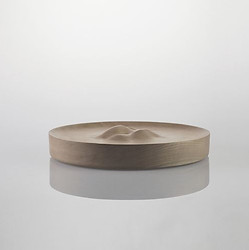
The Essence Sten desk organizer is inspired by the shapes of pebbles and stones and the way that they are weather by movement to fit nicely together. We wanted to incorporate this movement into our product by make it modular, allowing for more convenience when working with different tools.
Its base is ceramic and the walls are beech wood. Magnets hold it in place when arranged together.


The Essence Sol lamp raises and lowers its brightness according to its position on the body, such as the sun’s light is dependent on its position in the sky.
The floor lamp has a weighted ceramic base and a beech wood body. The LED light allows for easy and pain-free handling. There is a dimming sensor at the base.
Sol